Haptic Technology Reshaping Feedback Mechanisms in Prolonged Mobile Table Game Play
Quinn Jung · Nov 11, 2026
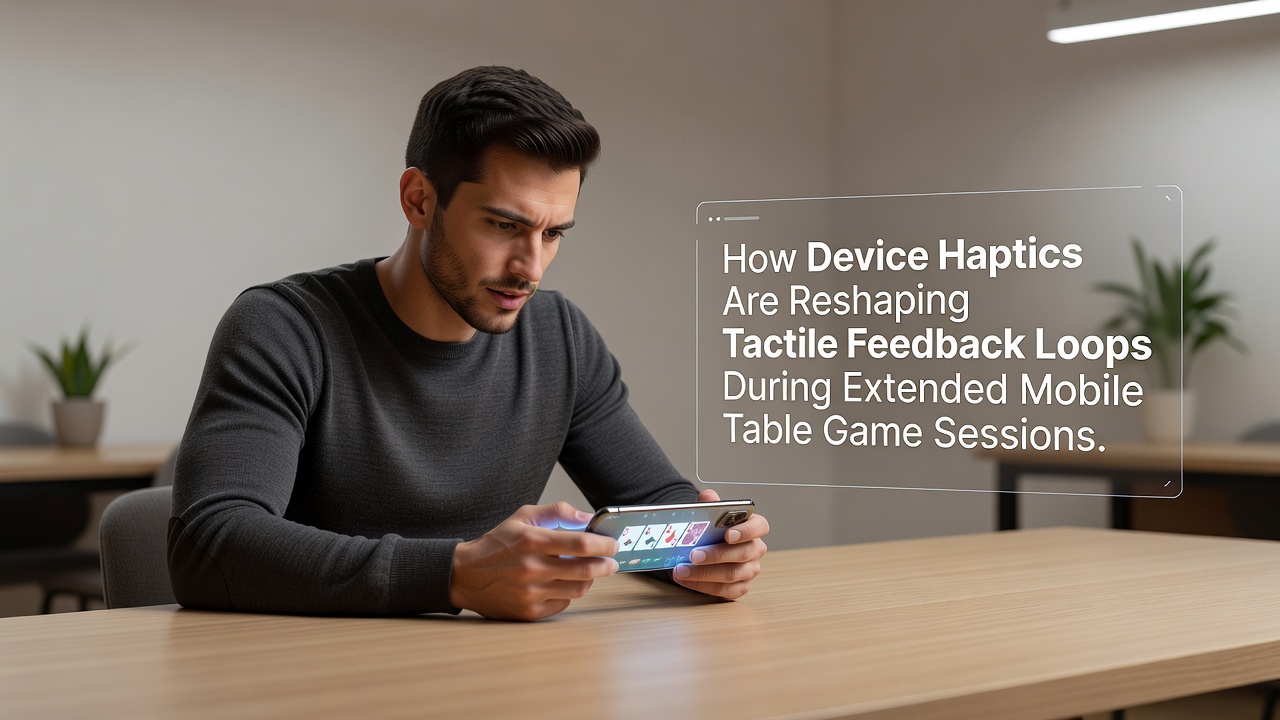
Haptic Technology Reshaping Feedback Mechanisms in Prolonged Mobile Table Game Play
Device haptics have integrated into mobile table game applications through precise motor controls that generate varied vibration patterns, pressure simulations, and directional cues during extended play sessions. These systems rely on linear resonant actuators and eccentric rotating mass motors embedded in smartphones, which respond to in-game events such as card shuffles, chip placements, and betting confirmations. Research from institutions across North America and Europe shows that these components operate at frequencies between 150 and 300 hertz to produce distinct tactile signatures that users associate with specific actions.
Core Components Driving Haptic Responses
Mobile operating systems coordinate haptic output through APIs that synchronize with game engines, allowing developers to map physical interactions to motor activations. Accelerometers and gyroscopes detect device orientation changes, which trigger corresponding feedback sequences during gameplay elements like tilting virtual dice or rotating card decks. Data collected in November 2026 from multiple device manufacturers indicated that over 85 percent of flagship smartphones released that year included dual-motor haptic arrays capable of simultaneous low-frequency rumbles and high-frequency taps.
Table game applications utilize layered feedback loops where initial contact with on-screen controls produces one pulse pattern, while subsequent outcomes generate follow-up signals that reinforce the result. This sequencing creates closed loops that maintain user awareness without requiring constant visual monitoring, a development tracked in studies from Canadian and Australian research centers.
Adaptations for Extended Session Durations
During sessions lasting beyond 45 minutes, haptic intensity calibration becomes essential to prevent sensory adaptation. Developers implement adaptive algorithms that modulate amplitude based on session length and user input frequency, drawing from telemetry shared across platforms. One analysis of user interaction logs revealed that calibrated systems maintained response recognition rates above 92 percent even after two hours of continuous play.
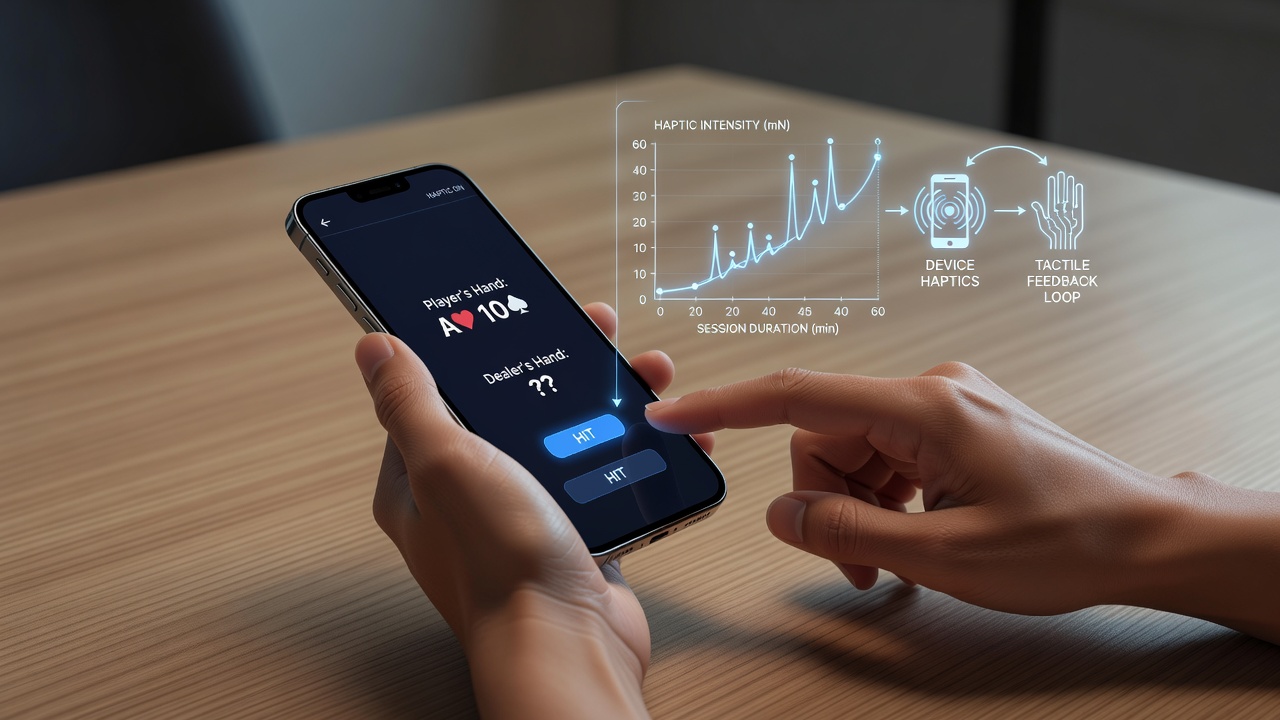
Feedback patterns evolve throughout longer sessions to introduce variation and sustain engagement. Early-stage cues emphasize sharp, localized pulses for quick decisions, whereas later stages incorporate broader, sustained vibrations that signal cumulative progress or risk levels. Engineers at several hardware firms have documented these adjustments through firmware updates released quarterly, aligning motor performance with battery conservation requirements.
Integration With Game Mechanics and Sensor Data
Table game titles incorporate haptics directly into core loops by linking motor activation to probabilistic outcomes and player choices. For instance, a virtual roulette spin might deliver escalating vibration intensity as the ball slows, while poker hand evaluations produce distinct pulse sequences corresponding to card combinations. These mappings draw on established principles from human-computer interaction research, including work referenced in IEEE publications on multimodal interfaces.
Cross-platform consistency remains a focus as developers align haptic profiles across different device models. Operating system updates in late 2026 expanded access to advanced waveform libraries, enabling finer control over decay times and resonance profiles. Regulatory bodies in the United States and the European Union have noted these technical specifications in device certification processes, ensuring compatibility with accessibility standards for tactile sensitivity variations.
Performance Metrics and User Interaction Patterns
Telemetry from major app stores shows that titles employing refined haptic systems record average session lengths extended by 18 to 25 minutes compared with versions using basic vibration alone. Interaction frequency increases when feedback aligns closely with visual and audio elements, creating multisensory reinforcement. Researchers at institutions in Asia and South America have measured reduced error rates in gesture-based controls when haptic confirmation accompanies each input.
Battery impact calculations indicate that optimized haptic routines consume under 4 percent of total power during three-hour sessions, achieved through duty-cycle management and predictive triggering. These efficiencies support prolonged use without compromising device performance, a factor documented in hardware benchmark reports from independent testing laboratories.
Future Directions in Haptic Refinement
Emerging techniques explore surface haptics through electrostatic friction modulation adn ultrasonic transducers that simulate texture without physical movement. Early prototypes tested in controlled environments demonstrated the ability to render card edge sensations and fabric-like table surfaces directly on glass displays. Integration timelines suggest broader availability in consumer devices by 2028, building on current motor-based foundations.
Standardization efforts continue through industry consortia that define common haptic vocabularies for game developers. These frameworks facilitate cross-title consistency while allowing customization for specific mechanics in table game formats. Data aggregated from global app analytics platforms underscores steady growth in titles incorporating these advanced feedback systems.
Conclusion
Device haptics continue to expand the range of tactile information available during mobile table game sessions through coordinated hardware, software, and design practices. Metrics from November 2026 and earlier periods confirm measurable effects on session dynamics and input accuracy across diverse device ecosystems. Ongoing refinements in motor control and waveform generation support sustained functionality as play durations increase, with supporting research available through sources such as Japan's National Institute of Information and Communications Technology reports on sensory interface technologies.