Power Optimization Strategies in Android Casino Gaming for Long Sessions
Ulrich Peters · Aug 24, 2026
Power Optimization Strategies in Android Casino Gaming for Long Sessions
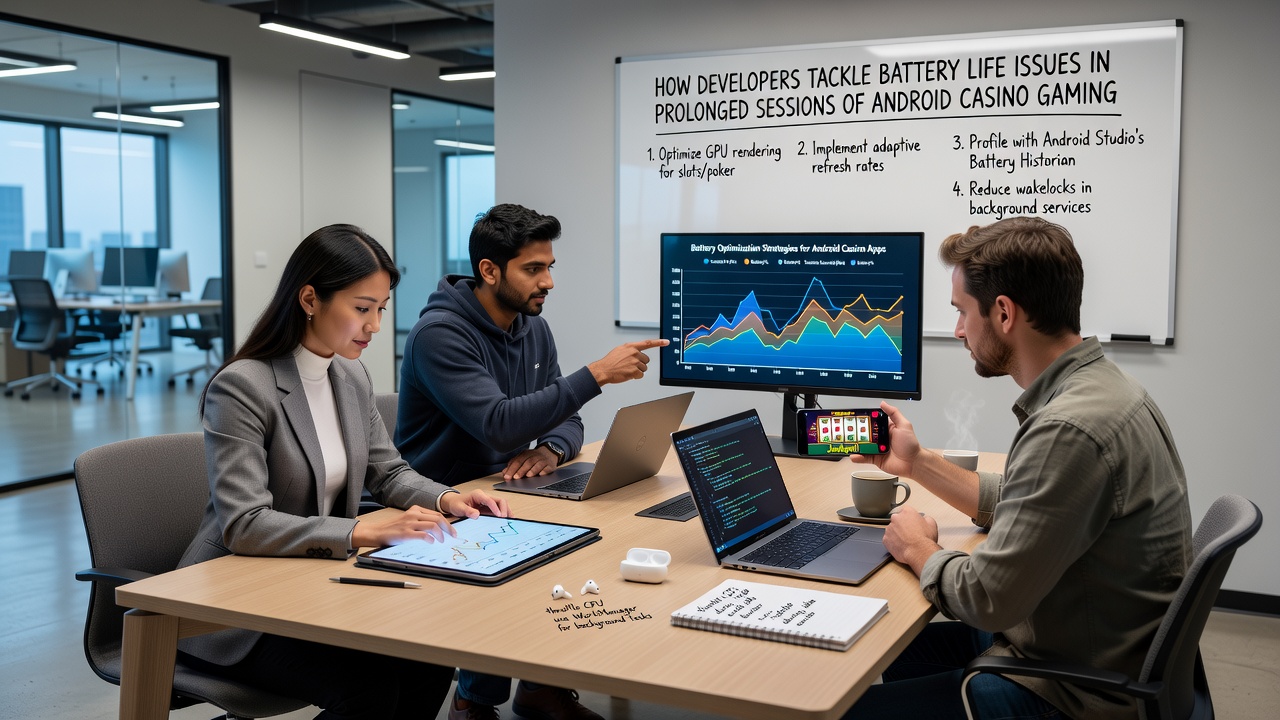
Android casino gaming apps place heavy demands on device resources because they combine real-time graphics rendering, continuous network communication for live dealer features, and background processes that track player sessions, yet developers have developed targeted approaches to reduce power consumption over hours of play. These methods focus on hardware-aware coding practices that align with Android's power management framework, and they have gained attention as mobile gaming volumes increased through 2026.
Core Battery Challenges in Casino Applications
Casino games on Android often rely on GPU-intensive animations for slot reels and card tables while maintaining persistent connections to servers for balance updates and random number generation, and this combination drains batteries faster than simpler utility apps. Data from mobile performance studies shows that prolonged sessions exceeding ninety minutes trigger rapid voltage drops in lithium-ion cells, especially when screen brightness stays elevated and location services remain active for compliance checks. Developers note that older chipsets in mid-range devices exacerbate these issues because they lack the efficiency cores found in newer Snapdragon and MediaTek processors released after 2024.
Implementation of Efficient Rendering Pipelines
Teams tackle graphics overhead by switching to Vulkan APIs instead of older OpenGL ES calls, which allows finer control over draw calls and reduces redundant frame buffer operations during extended play. They also implement level-of-detail scaling that lowers polygon counts and texture resolutions when battery levels fall below set thresholds, and this adaptive approach keeps frame rates stable without constant high-power GPU activity. Code audits reveal that replacing particle effects in bonus rounds with simpler sprite animations cuts shader computations by measurable margins, while asynchronous asset loading prevents main thread blocks that keep the CPU awake unnecessarily.
Network and Background Process Management
Constant data polling for jackpot updates and multiplayer lobbies represents another major drain, so engineers batch API requests into scheduled windows using WorkManager and JobScheduler rather than allowing frequent foreground service activity. They integrate Firebase Cloud Messaging for push-based balance refreshes instead of keep-alive sockets, and this shift lets devices enter Doze mode more readily during idle moments between spins. Testing on Pixel and Samsung devices demonstrates that these changes extend session times by limiting radio wake-ups, particularly when users engage with live dealer tables that otherwise maintain steady data streams.
Testing Frameworks and Real-World Validation
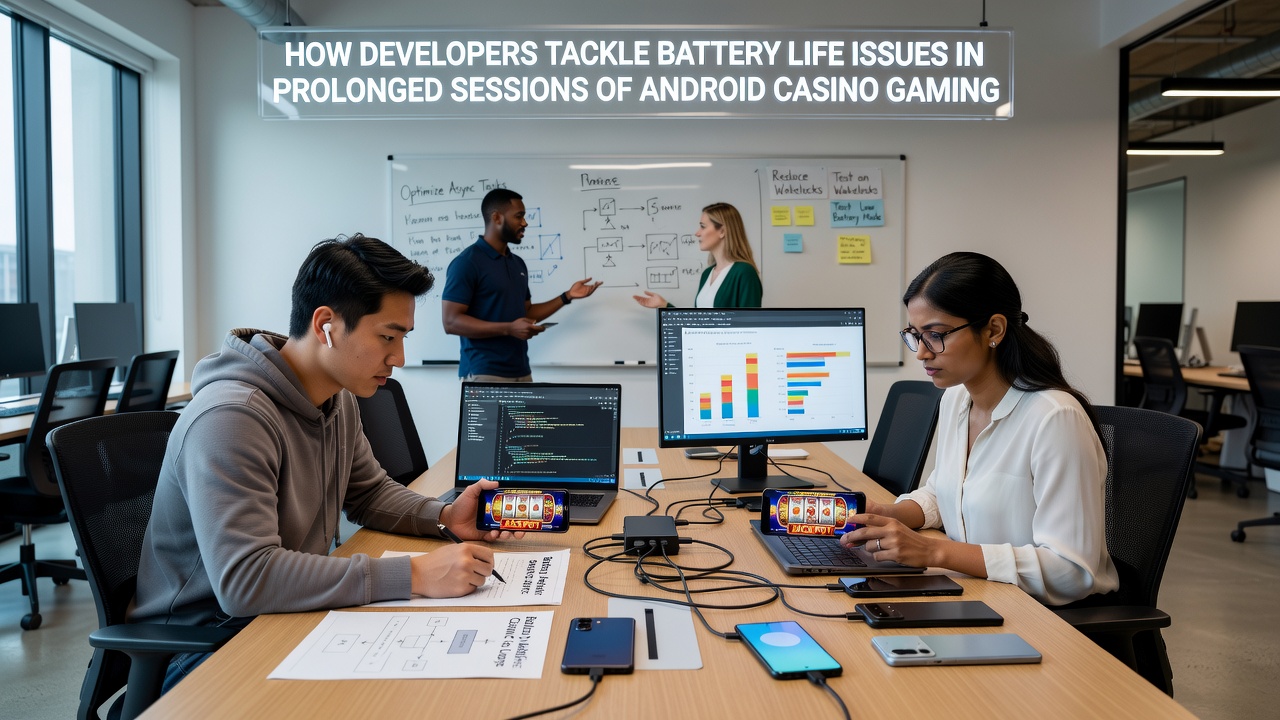
Development studios rely on Android Profiler and Battery Historian tools to map power usage across different hardware configurations, and they run scripted playthroughs that simulate eight-hour sessions on standardized test rigs. One research initiative from the University of Waterloo tracked energy metrics across multiple casino titles and found that optimized builds reduced average drain rates by coordinating sensor access and limiting wakelock durations. Android developer documentation outlines these profiling techniques in detail, while industry reports from the GSMA highlight similar patterns in mobile entertainment applications worldwide.
Hardware-Specific Adjustments and August 2026 Updates
Manufacturers introduced improved power rails and better thermal throttling in flagship models throughout 2025, which developers now leverage through device-specific build variants that disable high-refresh-rate modes unless plugged in. In August 2026 several studios rolled out updates that incorporated Android 16's enhanced adaptive battery APIs, allowing apps to predict user session lengths and pre-emptively scale back background sync. These refinements prove especially useful on foldable devices where larger screens increase display power draw during portrait or landscape casino play.
Future Directions in Energy-Efficient Design
Emerging techniques include machine learning models that analyze play patterns to forecast when users pause for breaks, triggering aggressive sleep states for non-essential components without interrupting core game logic. Collaboration with chipset vendors has led to custom instructions that offload random number calculations to dedicated secure elements, freeing the main CPU during long sessions. Observers note that these incremental gains accumulate across millions of daily users, and they align with broader mobile industry efforts to extend usable battery life across entertainment categories.
Conclusion
Through systematic profiling, API modernization, and adaptive resource scaling, developers continue to extend viable play durations on Android casino applications while preserving visual quality and responsiveness. The approaches described here reflect ongoing engineering responses to hardware constraints and platform capabilities, supported by data from academic studies and official documentation. As device architectures evolve further, these methods provide a foundation for sustained improvements in energy efficiency during extended gaming periods.